



2026 Cyber Security Trends
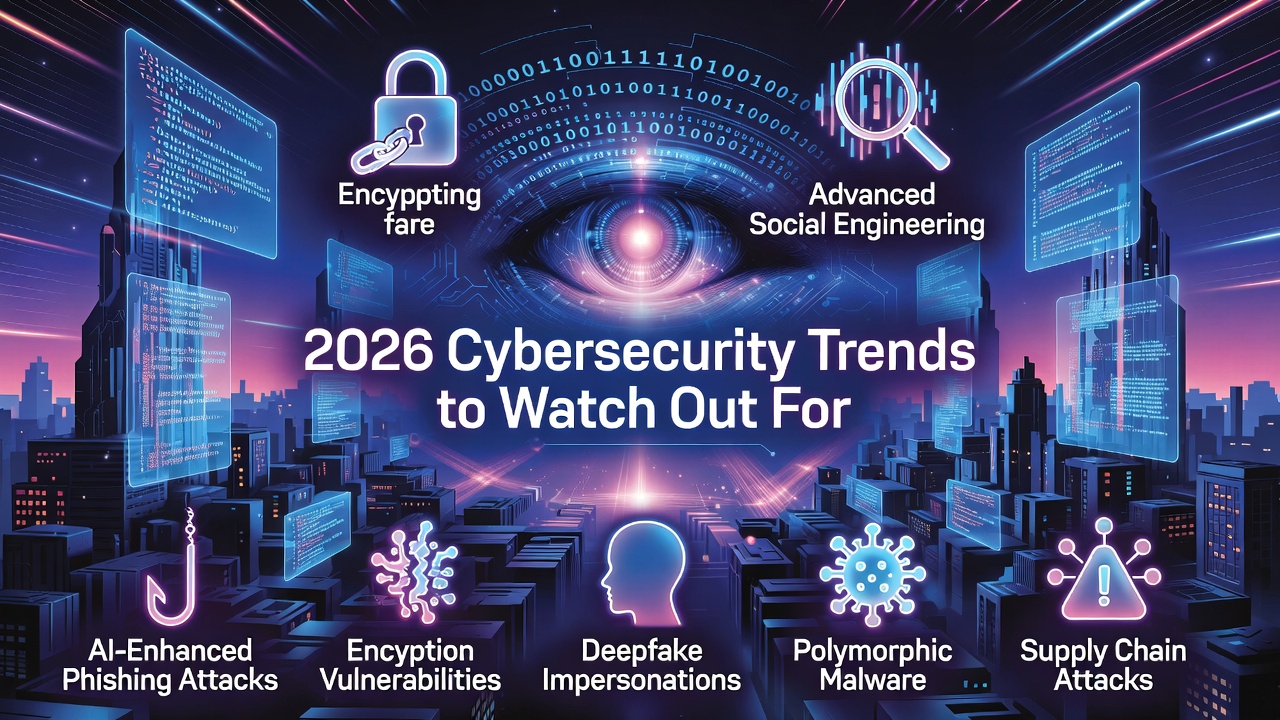
In 2026, cybersecurity is dominated by the duality of Artificial Intelligence (AI) in both attack and defense, the rise of “Living off the Land” tactics, and a shift toward resilience over prevention. Key trends include hyper-personalized AI phishing, automated threat detection, and advanced, multi-stage ransomware, forcing a move toward Zero Trust and continuous, automated compliance.
Top 2026 Cybersecurity Trends:
- AI-Powered Attacks & Defense: Attackers use AI for reconnaissance, malware generation, and bypassing multi-factor authentication. Defenders deploy AI for behavioral detection, analytics, and faster incident response.
- “Living off the Land” Tactics: Hackers are increasingly avoiding traditional malware, instead using legitimate system tools (e.g., PowerShell, WMI) to operate stealthily and avoid detection.
- Hyper-Personalized Phishing: AI enables highly contextual phishing messages that bypass traditional awareness training by mimicking internal, role-specific communication.
- Zero Trust and Identity-Centric Security: With the erosion of traditional perimeters, 2026 emphasizes strict, identity-driven access controls (Zero Trust) to protect distributed environments and IoT.
- Resilience Over Prevention: Due to the inevitability of breaches, strategies focus on quick recovery, immutable backups, and well-tested incident response, reducing the impact of ransomware.
- Supply Chain & Third-Party Risk: Increased focus on supply chain vulnerabilities, with organizations requiring better visibility and, governance over partner access.
- Automated Compliance & Governance: As regulations grow more complex, 2026 sees a shift toward continuous, automated compliance monitoring and evidence collection.
- Advanced Deepfakes: The inflection point for deepfake technology, where synthetic audio/video is undetectable to the average user, posing major social engineering threats.
These trends indicate a shift from reactive, perimeter-based security to proactive,, AI-driven, and identity-focused,, and, resilient, architectures.
Do you agree? Please share your thoughts..
- Tags:
- Cyber Security